SOLUTIONS

Agricultural applications. Explicit evidence requirements.

Find the problem your organization needs to solve, the sources required and the limits of the resulting assessment.

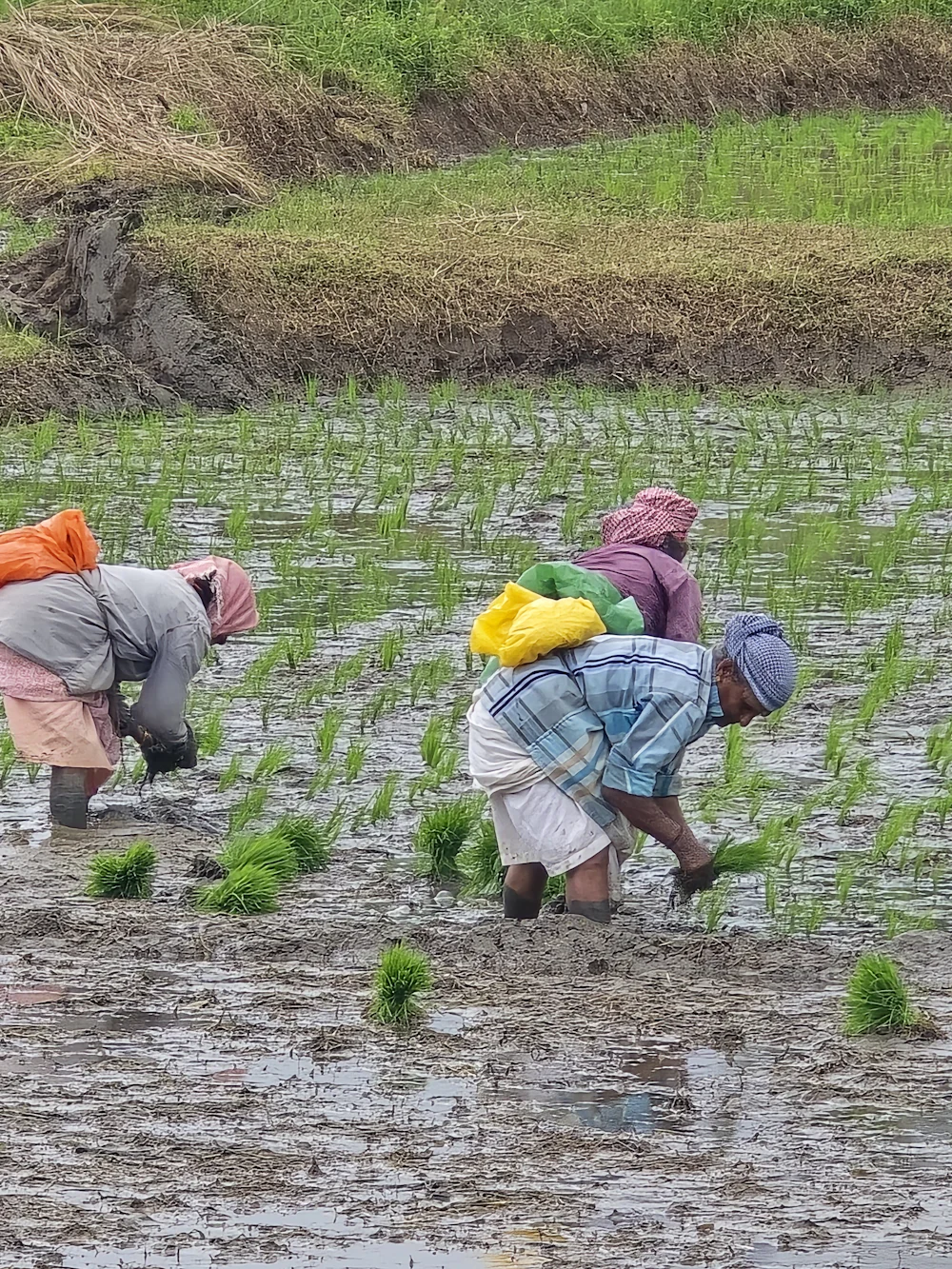
Farmers transplanting rice seedlings into a flooded field
Crop establishment · illustrative field scene
PROPOSED APPLICATIONS

These workflows describe intended program configurations. Source availability, methods, implementation and deliverables require agreement; they are not claims of deployed integrations or verified outcomes.

APPLICATION 01

Agricultural Practice MRV

A declaration that a practice was implemented is not the same as a supported assessment across participating fields.

Discuss this application
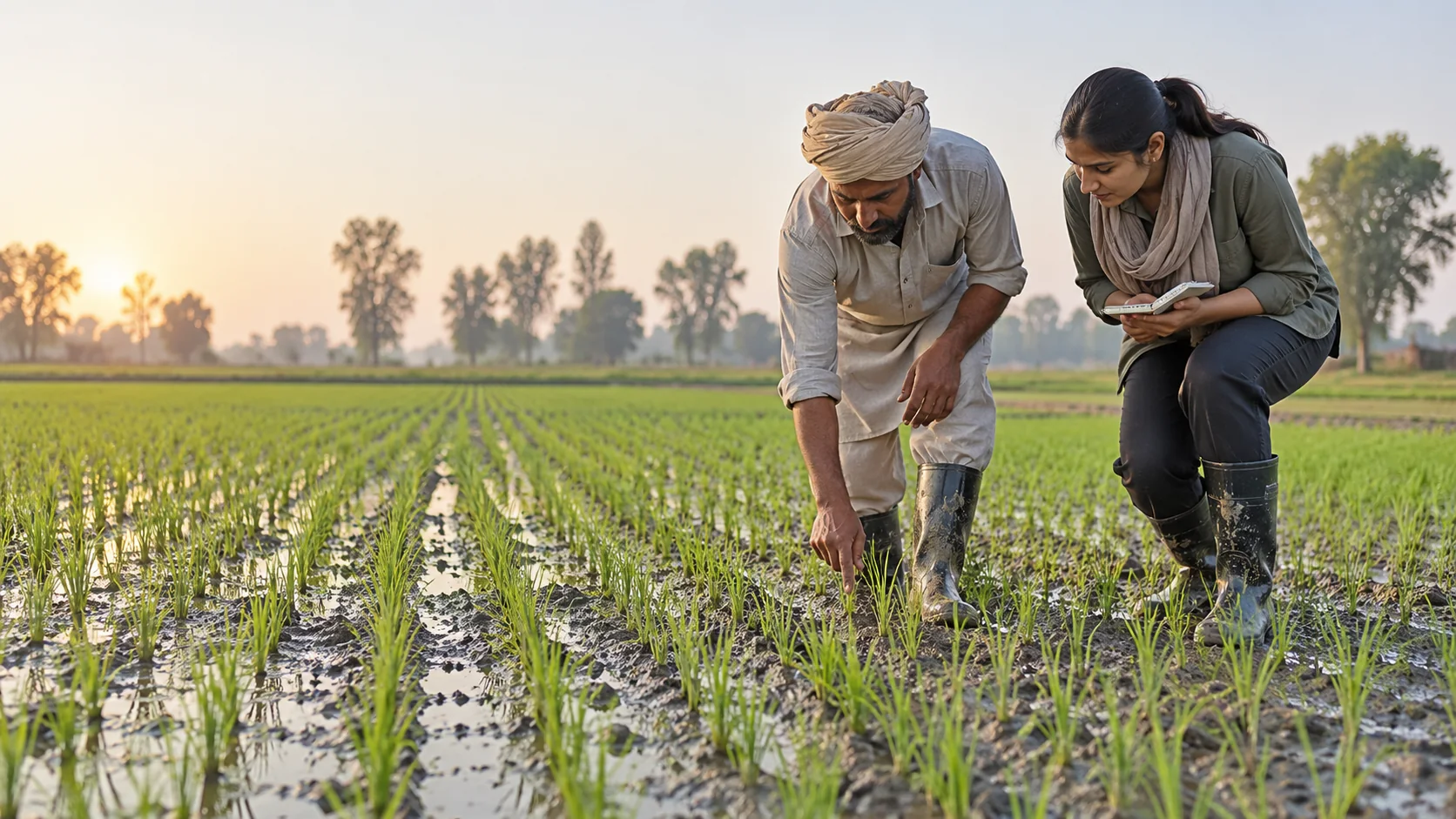
A farmer and agricultural field specialist inspect young rice plants together.
AI-GENERATED ILLUSTRATIONField practice observation · illustrative
Intended users
FPOs, agribusinesses and agricultural program operators.
Evidence inputs
Field boundaries, seasonal records, activity logs, authorized observations, photographs and suitable geospatial information.
Proposed workflow
Define practice requirements, register fields and seasons, associate source records, check the required evidence and review conflicts or missing information.
Outputs
Intended outputs: practice assessments, evidence-completeness reports and program summaries.
Interpretation boundaries
Missing records remain unresolved until suitable evidence arrives. Practice assessment is distinct from quantified environmental impact.
APPLICATION 02

Water-use and irrigation intelligence

An irrigation event, water level and volume of water applied measure different things. Confusing them can produce unsupported savings claims.

Discuss this application
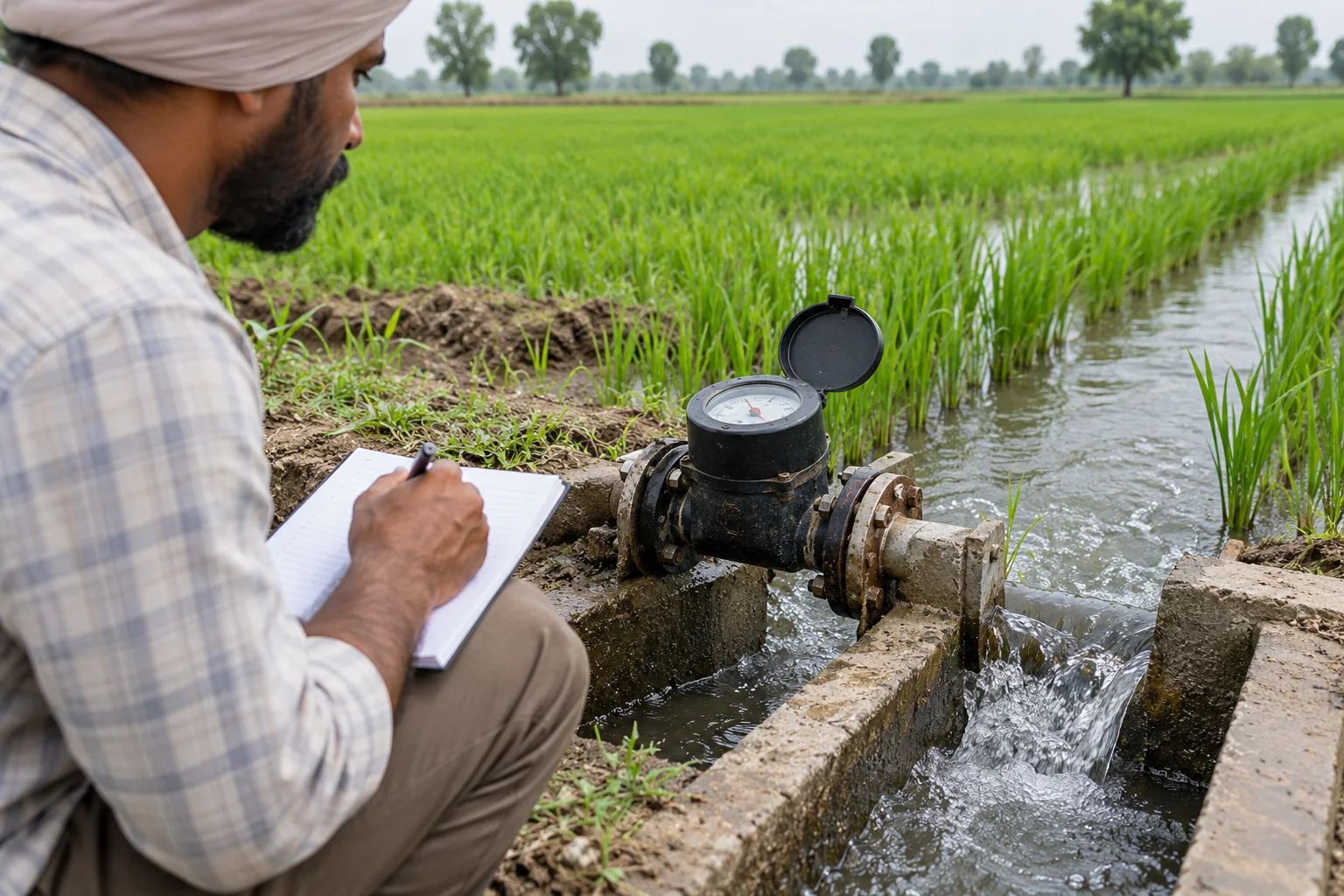
A field technician reads a flow meter beside a rice-field irrigation channel.
AI-GENERATED ILLUSTRATIONIrrigation measurement · illustrative
Intended users
Irrigation program teams, FPOs, agricultural institutions and researchers.
Evidence inputs
Irrigation logs, authorized flow meters or pumping measurements, field conditions, weather and suitable remote-sensing data where available.
Proposed workflow
Record events, check instrument units and calibration, associate observations with fields and periods, and apply a suitable baseline comparison with uncertainty.
Outputs
Intended outputs: irrigation timelines, instrument-supported water totals, method-based estimates and field-condition reports.
Interpretation boundaries
Water savings require a defensible comparison, not just a practice change. Measured values remain distinct from estimates; instrumentation and integrations are program-dependent.
APPLICATION 03

Sustainable agriculture programs

Eligibility, participation and implementation evidence can become inconsistent across locations and seasons.

Discuss this application
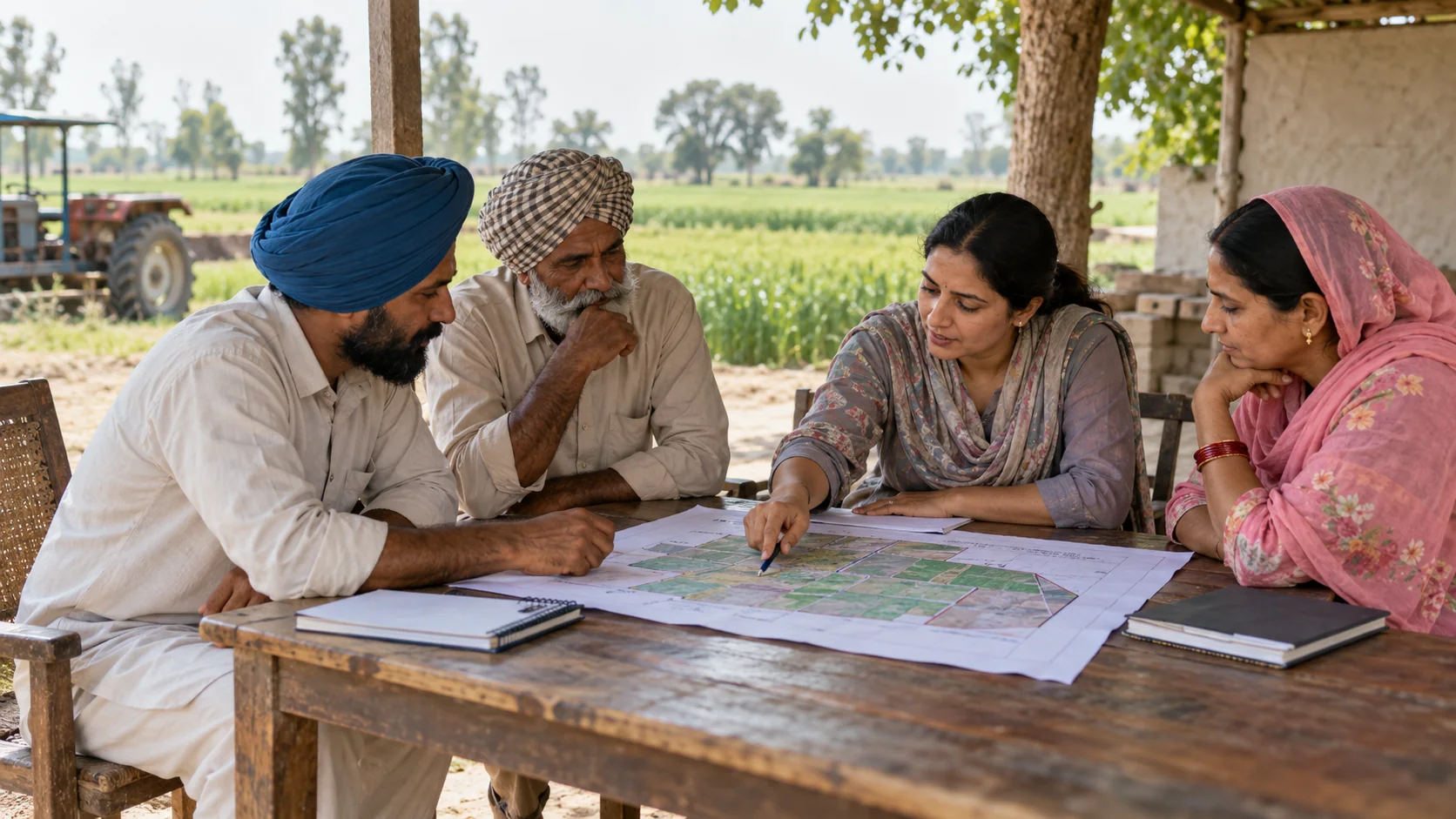
Farmers and a program coordinator review a field sketch together under a shaded farm shelter.
AI-GENERATED ILLUSTRATIONProgram and field planning · illustrative
Intended users
Government and development programs, agribusinesses and sustainability program operators.
Evidence inputs
Eligibility criteria, authorized participation records, fields and seasons, practice requirements and applicable observation sources.
Proposed workflow
Define criteria, register permitted participants, monitor evidence requirements, review exceptions and report progress consistently.
Outputs
Intended outputs: participation records, implementation assessments, evidence gaps and methodology-based outcome summaries.
Interpretation boundaries
Program-specific methods must be agreed. Participation alone is not proof of compliance, certification or benefit.
APPLICATION 04

Carbon and environmental MRV

Environmental claims need boundaries, a baseline, a methodology and suitable activity data, not only records of an agricultural practice.

Discuss this application
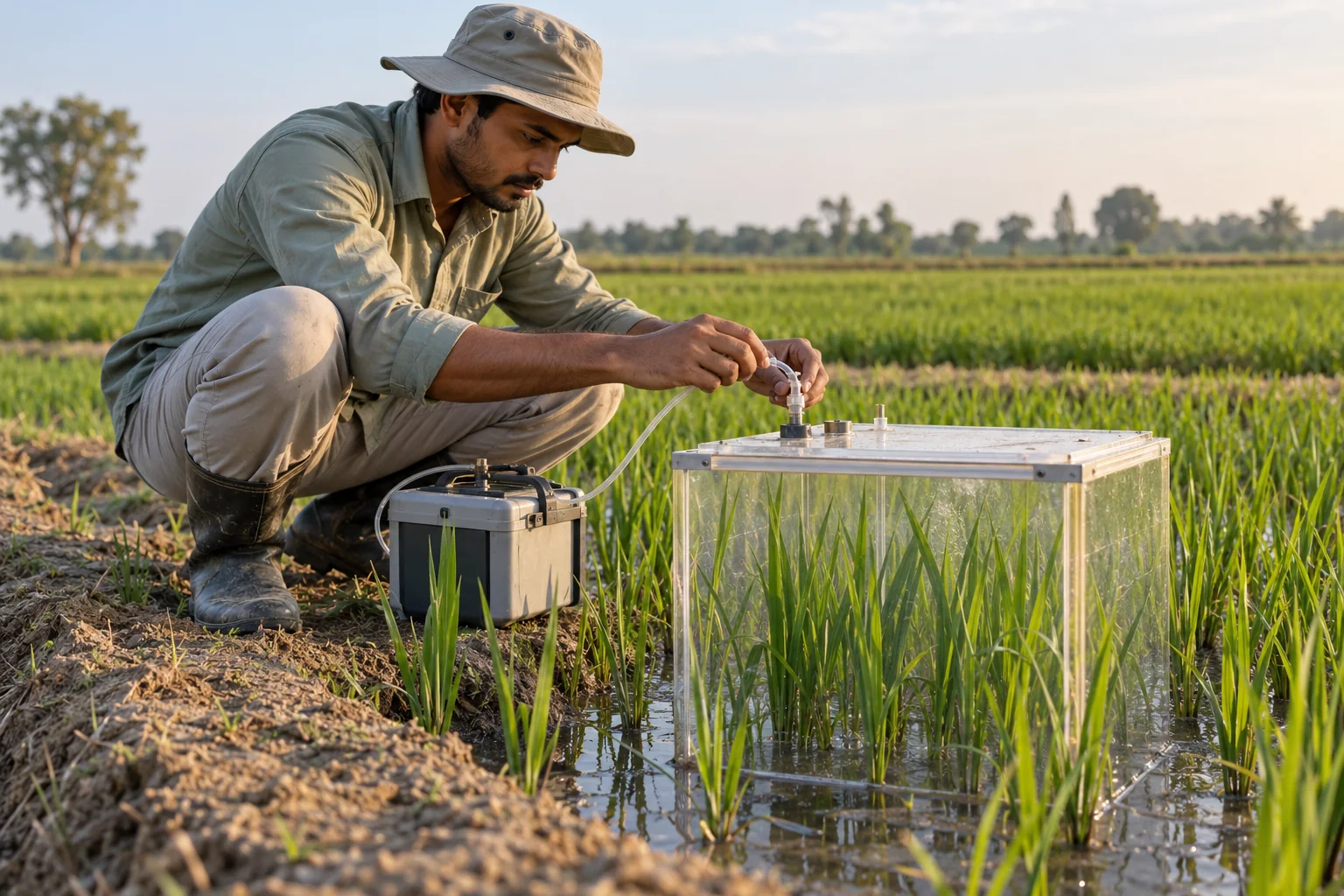
A field researcher collects a sample from a transparent chamber placed over rice plants.
AI-GENERATED ILLUSTRATIONEnvironmental field measurement · illustrative
Intended users
Environmental project developers, sustainability teams and authorized reviewers.
Evidence inputs
Project boundary, baseline data, activity sources, applicable calculation procedures, method version and uncertainty.
Proposed workflow
Organize sources, retain assumptions, calculate under the applicable method and prepare records for review. Track gaps and changes rather than overwriting assumptions.
Outputs
Intended outputs: traceable calculations, monitoring reports and evidence packages.
Interpretation boundaries
Evidence-workflow services do not automatically issue carbon credits or provide independent certification. No quantified reduction is claimed here.
APPLICATION 05

Crop insurance and risk evidence

Assessment teams need dated documentation of field conditions and events, with discrepancies and incomplete records made visible.

Discuss this application
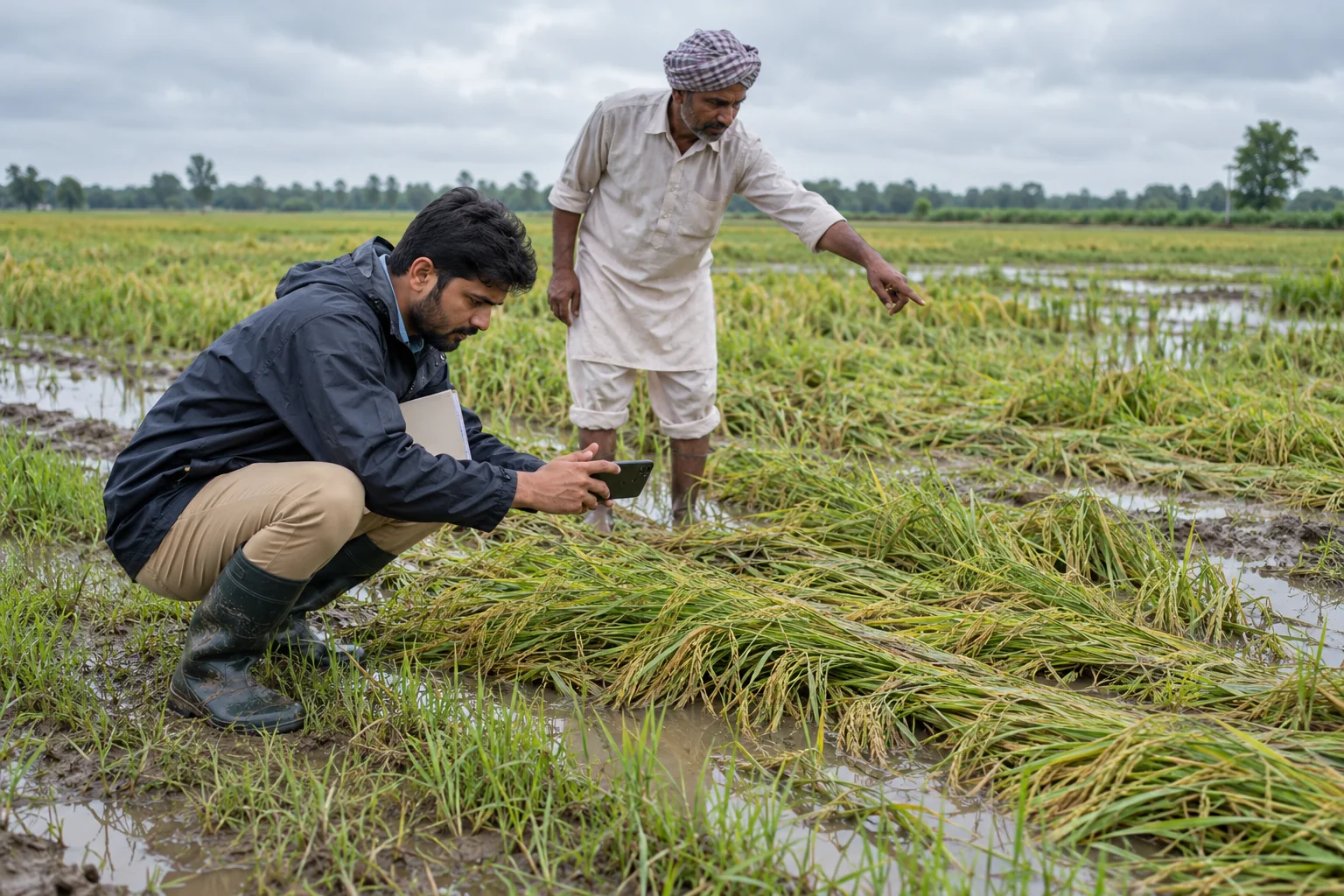
An assessor photographs lodged rice plants while a farmer points out field conditions after rain.
AI-GENERATED ILLUSTRATIONCrop-condition documentation · illustrative
Intended users
Insurers, authorized inspection teams and risk-assessment partners.
Evidence inputs
Time-stamped photographs, observations, weather context, inspection records and authorized case references.
Proposed workflow
Assemble field evidence timelines, flag inconsistent records and prepare a case for the insurer’s own assessment process.
Outputs
Intended outputs: structured field documentation, evidence summaries and review queues.
Interpretation boundaries
The Carbon Credit does not replace policy interpretation, insurer decisions or formal loss adjustment. Geospatial observations alone do not establish a covered loss.
APPLICATION 06

Agricultural supply-chain traceability

A field record and downstream shipment documentation may have missing or ambiguous links.

Discuss this application
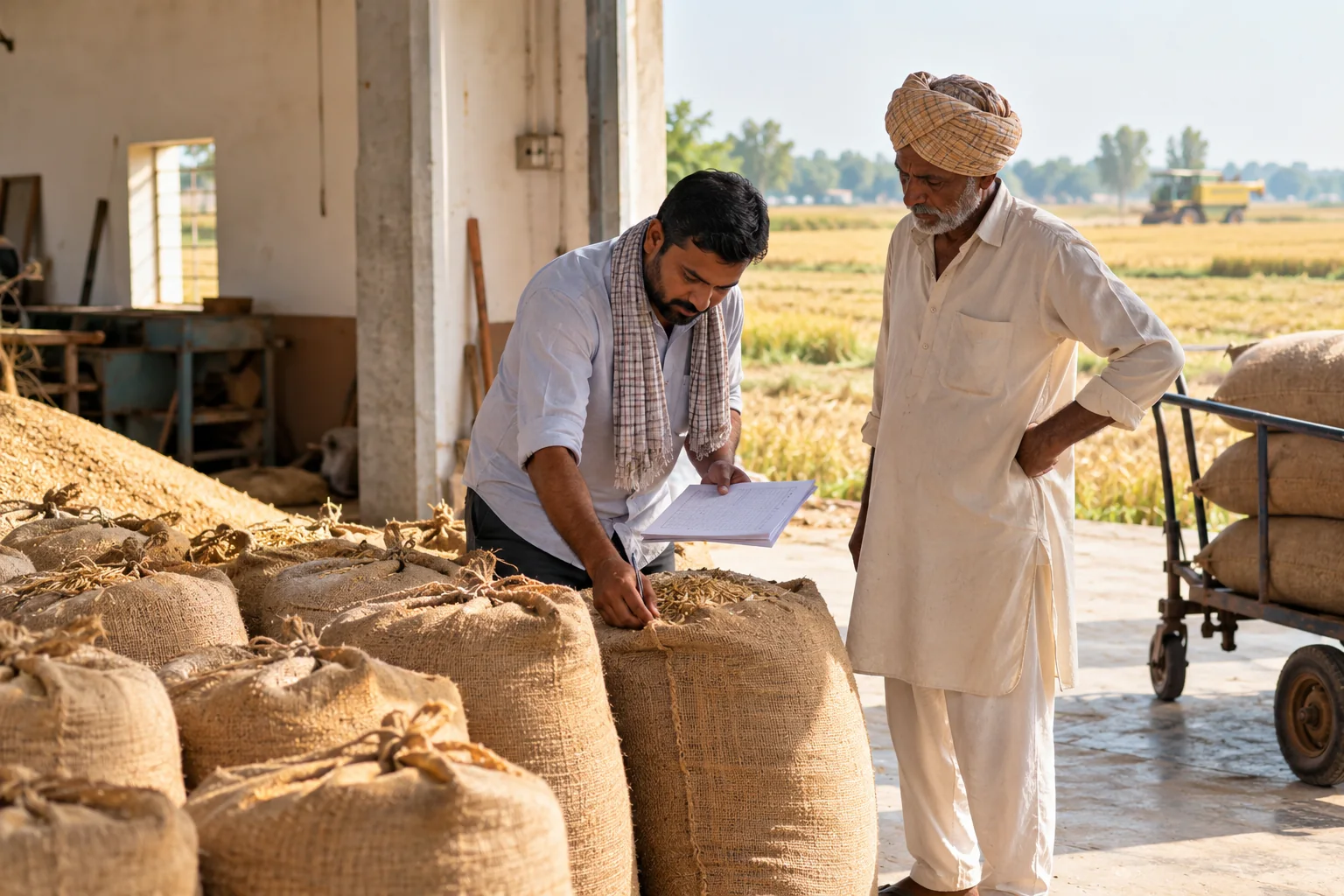
A worker and farmer check an unbranded paddy sack at a rural collection point.
AI-GENERATED ILLUSTRATIONField-to-collection handoff · illustrative
Intended users
Agribusinesses, supply-chain organizations and authorized program partners.
Evidence inputs
Field identities, crop-season and production records, downstream references and appropriate permissions.
Proposed workflow
Link authorized records, reconcile references, surface missing links and document which chain-of-custody steps are supported.
Outputs
Intended outputs: traceability summaries, reconciliation findings and supporting records.
Interpretation boundaries
Farm records alone do not prove the origin of every shipment. Physical custody and downstream documentation require separate controls.
DIRECT SEEDED RICE

Show how the crop was established.

A practice record describes crop establishment; it does not replace observations about the field’s water regime.

CROP ESTABLISHMENT · WATER REGIME IS A SEPARATE CHOICEField schematic
01 / TRANSPLANTEDNursery → prepared fieldSeedlings move from a nursery into the field.
02 / DIRECT SEEDEDSeed → field rowsSeed is placed directly into prepared soil.
↗

Establishment ≠ water management. Sowing method alone does not show how a field was irrigated or how long it remained flooded.

Schematic only. Field preparation, water conditions and management vary; any emissions comparison needs an applicable method and field evidence.
CHOOSE THE RIGHT SOLUTION

Define the outcome before choosing the data.

Program context fields are optional. Do not include confidential farmer data, precise private field locations or sensitive documents. This prepares an email draft; nothing is submitted until you send it.

START WITH A CONVERSATION

Build a clearer picture
of agricultural impact.

Talk with The Carbon Credit about a DSR program, field evidence requirements, research collaboration or a potential project partnership.